



What Is the Fire-ED Teaching Tool?
Carolann ChristieA Practical Walkthrough for Fire & Life Safety Educators
If you work in fire prevention or public education, you already know the challenge.
You’re expected to deliver meaningful fire and life safety education—often with limited time, limited resources, and tools that don’t always lead to lasting behavior change. You do the school visits, the community events, the demonstrations… and yet preventable fires and injuries still happen.
That’s the gap the Fire-ED Teaching System was designed to address.
Let’s walk you through what Fire-ED is, how it works, and why so many educators see it as a different—and more effective—approach to prevention.
Understanding the Fire-ED Teaching System
At its core, Fire-ED is a hands-on, interactive fire and life safety education system.
It was designed specifically for:
- Fire departments
- Fire prevention officers
- Life safety educators
- Teachers and community partners
And it’s used in real-world settings like:
- Schools and classrooms
- Community centres and libraries
- Fire halls and open houses
- Partner-led community programs
Fire-ED isn’t a one-off presentation or a box of giveaways. It’s a teaching system that helps educators consistently deliver clear, practical safety lessons—while actively involving the learner in the process.
How the Fire-ED System Works
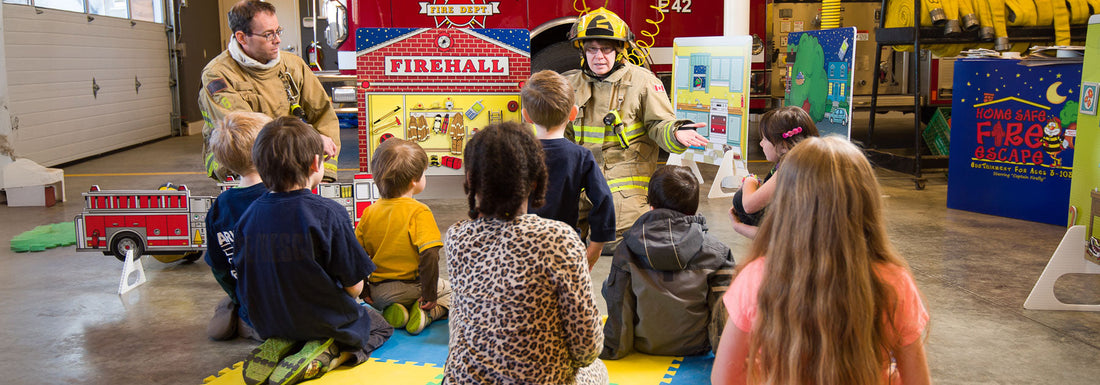
The easiest way to understand Fire-ED is to picture what happens during a lesson. Instead of children passively listening or watching, they become part of the scenario.
Using the Fire-ED teaching tool, learners:
- Identify hazards
- Build real-world fire scenarios
- Make decisions
- Talk through outcomes
- Learn correct fire safety behaviours in context
The educator isn’t performing at the audience.
They’re guiding the experience.
Instead of children passively listening or watching, they become part of the scenario.
This approach allows children—and adults—to:
- See risks clearly
- Understand consequences safely
- Practice decision-making
- Retain lessons long after the session ends
It’s structured enough to deliver consistent messaging, yet flexible enough to work across different ages, settings, and presenters.
It’s much easier to understand when you see it in action.
Why This Approach Is Different
Traditional fire safety education often relies on:
- Passive learning
- Memorization
- One-time exposure
Fire-ED was built around a different principle:
People—especially children—learn best by doing.
The system works because it:
- Is hands-on and interactive
- Encourages critical thinking, not rote answers
- Allows learners to build scenarios from their own perspective
- Reinforces behaviour, not just information
The result is education that sticks—because learners aren’t just told what to do, they actively participate in learning why and how.

As a whole we all need to be taking fire and life safety education more seriously!
One in four persons will at some point experience a fire in their home. Education is key and the Fire-ED Teaching System is the right toolkit to get the job done. A firefighter wouldn't battle a fire without the right safety clothing, tools and equipment. Having access to cutting edge resources to educate the public will help get the job done right if we utilize Fire-ED.
Duncan Rydall, Fire Chief
The Bigger Picture: Preventing Fire-Related Tragedies
The long-term goal isn’t just better presentations—it’s:
- Safer homes
- More informed communities
- Youth empowered to recognize risk and act responsibly
Fire-ED is part of a broader movement to strengthen prevention education by giving educators better tools—and giving communities a better chance to avoid preventable loss.
Instead of children passively listening or watching, they become part of the scenario.
Fire-ED is developed and supported by a team dedicated exclusively to advancing fire and life safety education across North America. Their work continues to shape innovative, hands-on learning tools that make safety education more engaging and effective.
Visit the official Fire-ED website
If you’re ready to bring a more engaging, effective approach to fire and life safety education into your community, the next step is simple.
Get the Fire-ED Teaching Tool
If you have questions, need more information, or want to talk through how Fire-ED would fit into your existing programs, we’re happy to help.
Contact us for more information